
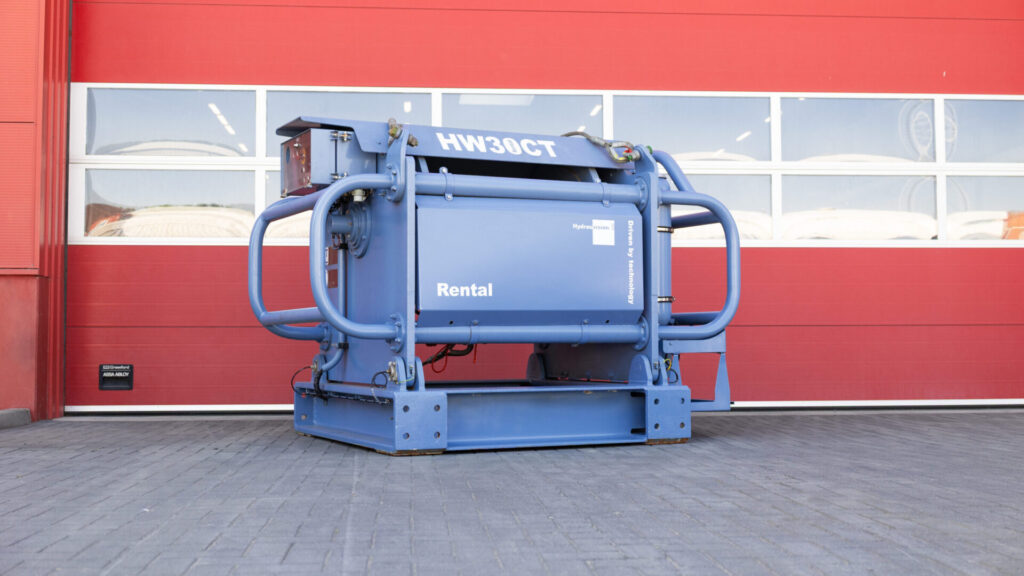
Commissioning a hydraulic winch for an offshore project follows a structured sequence: pre-installation checks, hydraulic circuit flushing and pressure testing, functional testing of all operating modes, brake certification, and final safety sign-off against applicable offshore regulations. The process demands close coordination between the installation crew, hydraulic engineers, and the certifying authority. The questions below walk through each stage in detail, from the first pre-live checks to the most common problems teams encounter on deck.
What checks must be completed before a hydraulic winch goes live?
Before a hydraulic winch is put into operation offshore, engineers must verify mechanical alignment, fastener torques, wire spooling integrity, hydraulic connections, fluid levels, and instrumentation calibration. These pre-commissioning checks confirm that every component is correctly installed and that no assembly errors exist before pressure is applied to the system.
The pre-live checklist typically covers the following areas:
- Structural and mechanical inspection: Confirm that the winch frame, drum, and gearbox are correctly aligned and that all mounting bolts are torqued to specification. Check that the wire rope is correctly spooled with adequate pre-tension and that the drum flanges show no damage.
- Hydraulic connections: Verify that all hose assemblies, fittings, and manifold ports are connected to the correct circuit points, with no cross-connections. Inspect for any visible damage to hoses or fittings introduced during transport or installation.
- Fluid quality and level: Confirm that the hydraulic reservoir is filled with the correct grade of hydraulic fluid and that the fluid is clean and within the specified cleanliness class (typically ISO 4406 class 16/14/11 or better for offshore systems).
- Instrumentation and controls: Check that pressure gauges, temperature sensors, flow meters, and limit switches are correctly installed and calibrated. Verify that both wired and wireless remote control systems respond correctly before any load is applied.
- Safety devices: Confirm that overload protection, emergency stop circuits, and fail-safe brake systems are correctly wired and functional.
Skipping or rushing these checks is the single most common reason commissioning is delayed. A thorough pre-live inspection takes time upfront but prevents far more costly interventions once the system is under pressure.
How does the hydraulic circuit get flushed and pressure-tested offshore?
The hydraulic circuit is flushed by circulating clean hydraulic fluid through the system at high velocity, bypassing the winch motor, to remove manufacturing debris, weld slag, and contamination before the winch operates under load. Once the flushing target cleanliness level is reached, the circuit is pressure-tested to confirm structural integrity and leak-free performance.
Flushing is not simply running the pump. The process follows defined steps:
- Bypass installation: The hydraulic motor on the winch is isolated and a flushing bypass loop is connected so that fluid circulates through the pipework and hoses without passing through the motor’s precision internals.
- Circulation and filtration: High-flow flushing equipment circulates fluid through the circuit, typically using dedicated flushing units with fine filtration (3–10 micron). Fluid samples are taken at regular intervals and analyzed with a particle counter until the target cleanliness class is achieved.
- Pressure testing: Once the circuit is clean, the system is pressurized to 1.5 times the maximum working pressure (or as specified by the relevant standard) and held for a defined period, typically 30 minutes. Engineers inspect every joint, fitting, and hose assembly for leaks or deformation.
- Documentation: Flushing certificates and pressure test records are generated. These documents form part of the commissioning dossier required by the certifying authority.
Offshore conditions add complexity to this process. Limited deck space, temperature variation, and the need to work within tight project schedules mean flushing equipment must be compact and pre-configured before mobilization. Pre-testing the circuit in a workshop environment, where possible, significantly reduces the time needed offshore.
Tell us what you need and request a quote for HydrauPack, HydrauWinch, HydrauSupport or another rental solution.
What are the main commissioning stages for a hydraulic winch system?
Hydraulic winch commissioning for an offshore project follows five main stages: pre-commissioning checks, hydraulic flushing and pressure testing, no-load functional testing, load testing, and final acceptance testing with documentation. Each stage must be completed and signed off before the next begins.
No-load functional testing
With the hydraulic circuit clean and pressure-tested, the winch is operated through its full range of functions without load. Engineers verify that the drum rotates in the correct direction for both haul-in and pay-out, that speed control responds correctly across the full range, and that all limit switches and automatic stop functions operate as designed. The brake is cycled repeatedly to confirm smooth engagement and release. Any abnormal noise, vibration, or heat generation is investigated before progressing.
Load testing and final acceptance
Load testing applies a defined percentage of the winch’s rated line pull, commonly 100% SWL for functional verification and up to 125% for proof load testing, depending on the applicable standard and client specification. Load is applied using a calibrated load cell or test weight arrangement. Engineers record line pull, hydraulic pressure, temperature, and brake holding capacity at each load step. Final acceptance testing confirms that all advanced functions, such as constant tensioning or active heave compensation, perform within specification. The completed test records, certificates, and as-built documentation are compiled into a commissioning dossier handed over to the client and the certifying authority.
How is the winch brake tested and certified during commissioning?
The winch brake is tested by applying the rated load to the wire rope, engaging the brake, and verifying that the drum holds position without slipping for a defined hold period, typically at 100% and 150% of the rated static brake holding capacity. The test results are documented and certified by the attending surveyor from the relevant classification society or inspection body.
Brake testing covers two distinct functions. The static brake must hold a suspended load indefinitely when the hydraulic system is depressurized; this is the fail-safe condition that protects against power loss offshore. The dynamic brake (where fitted) must bring a moving load to a controlled stop within a defined distance or time.
Certification requirements vary by project and flag state, but most offshore winch applications reference standards such as DNV, Lloyd’s Register, or Bureau Veritas guidelines. The certifying surveyor witnesses the brake test directly and countersigns the test certificate. Without a valid brake certificate, the winch cannot be put into service on a certified offshore installation.
It is worth noting that brake adjustment is one of the most common sources of delay during commissioning. Disc brakes in particular require careful bedding-in and adjustment to achieve consistent holding torque, and this process can take several iterations before the brake performs reliably across the full load range.
What safety and regulatory requirements apply to offshore winch commissioning?
Offshore hydraulic winch commissioning must comply with the flag state regulations of the vessel or installation, the requirements of the relevant classification society (such as DNV, Lloyd’s Register, or Bureau Veritas), and any project-specific client or contractor safety management requirements. Equipment used on offshore installations typically also needs to meet ATEX or IECEx requirements if deployed in hazardous areas.
Key regulatory touchpoints during commissioning include:
- Classification society approval: Design drawings and calculations for the winch and its supporting structure are typically approved before fabrication. The commissioning test is the physical verification that the built system matches the approved design.
- Lifting equipment regulations: In most jurisdictions, winches used for lifting operations fall under lifting equipment directives (such as the EU Machinery Directive or LOLER in the UK). This requires documented load testing, inspection, and a certificate of thorough examination before first use.
- DNV 2.7-1/2.7-3 for offshore containers and frames: Where the winch is mounted on an offshore frame or skid, the frame itself must be certified to DNV 2.7-1 or equivalent, and the frame’s structural integrity must be verified as part of the commissioning process.
- Personnel competency: Commissioning engineers and offshore mechanics must hold valid offshore survival and safety certificates (such as BOSIET/HUET) and relevant technical competency records. The commissioning team must be authorized to work on pressurized hydraulic systems.
- Documentation package: The completed commissioning dossier, including flushing certificates, pressure test records, brake test certificates, load test records, and as-built drawings, must be handed over before the winch enters service.
What problems commonly arise during hydraulic winch commissioning, and how are they resolved?
The most common problems during hydraulic winch commissioning offshore are hydraulic leaks at connections and fittings, contamination-related failures, brake adjustment issues, control system faults, and wire rope spooling problems. Most of these can be resolved on-site by an experienced commissioning team, provided the right spare parts and diagnostic tools are available.
Hydraulic leaks and contamination
Leaks at threaded fittings and flanged connections are the most frequent issue encountered during pressure testing. They are typically caused by incorrect assembly torques, damaged seals introduced during transport, or fittings that were not fully seated. Resolution requires depressurizing the affected section, replacing the seal or fitting, and re-testing. Contamination failures, where a motor or valve is damaged by debris in the circuit, are prevented by rigorous flushing before the motor is reconnected. When contamination is found after motor connection, the circuit must be flushed again and the affected component inspected or replaced.
Control system and brake faults
Control system faults during commissioning are often wiring errors, incorrect parameter settings in the PLC or proportional valve amplifier, or sensor calibration issues. Systematic fault-finding using the system’s diagnostic interface resolves most of these quickly. Brake faults, particularly inconsistent holding torque on disc brakes, require careful adjustment of spring pre-load and friction pad bedding. In some cases, the brake disc surface needs light machining if contamination has caused uneven wear before commissioning began.
Having an experienced hydraulic engineer on board with access to the system’s design documentation significantly reduces the time needed to diagnose and resolve these issues. Pre-testing the complete system in a workshop before offshore mobilization, as part of a factory acceptance test, is the most effective way to catch and resolve the majority of commissioning problems before they become offshore delays.
How we support hydraulic winch commissioning offshore
We provide end-to-end support for offshore hydraulic winch commissioning, from workshop preparation through to on-site sign-off. Our approach is built around reducing risk and minimizing time offshore, which is why every winch in our fleet is configured, tested, and documented in our own workshop before mobilization. Here is what we bring to each project:
- Factory acceptance testing (FAT) completed before the winch leaves our facility, covering full functional and load testing
- Certified winch wire, correctly spooled with pre-tension, ready for immediate offshore use
- Wired and wireless remote control systems, pre-configured and tested
- Advanced functions including constant tensioning (CT) and active heave compensation (AHC), verified during FAT
- DNV 2.7-certified offshore frames for safe lifting and deck operations
- 24/7 mobilization with offshore-certified mechanics who know our equipment in detail
- Full commissioning documentation package, including flushing certificates, pressure test records, and brake certificates
Whether you need a winch for a short offshore campaign or a long-term project, we work with you from the specification stage through to final acceptance. Contact us to discuss your project requirements and find out how we can get your winch offshore-ready on time.