
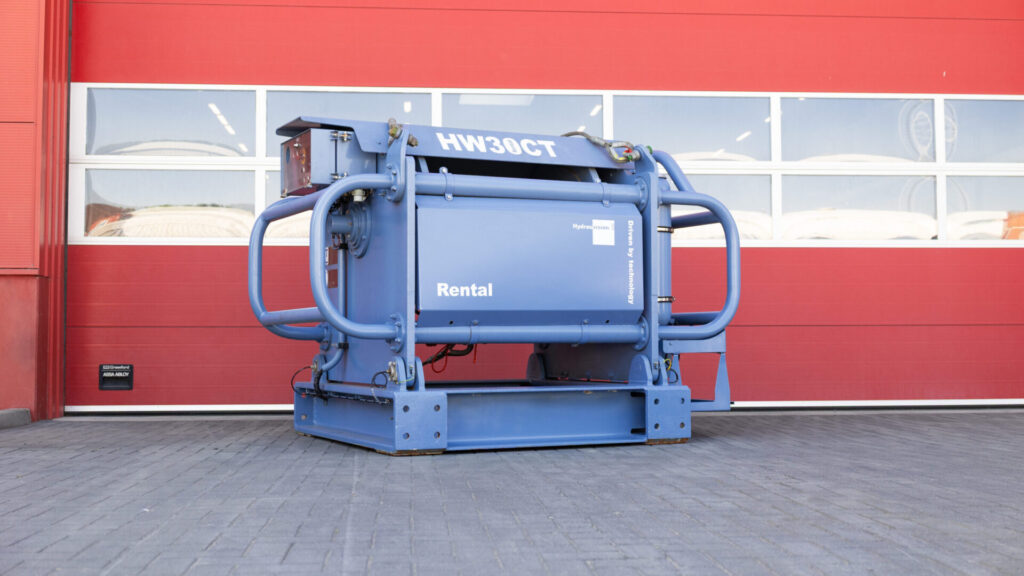
Hydraulic winches are used extensively in oil and gas operations for mooring and anchoring, anchor handling, pipeline and umbilical laying, well intervention, and subsea construction. These applications share a common demand: reliable, high-force pulling and holding power in environments where failure is not an option. The sections below break down each major application area and what drives winch selection in this industry.
How are hydraulic winches used in mooring and anchoring operations?
In mooring and anchoring operations, hydraulic winches control the tension and positioning of mooring lines that hold floating production units, drilling rigs, and FPSOs in place. The winch pays out or retrieves wire or chain to maintain correct vessel position against currents, wind, and wave action. Constant tensioning capability is what makes hydraulic winches the preferred choice here.
Mooring winches on offshore platforms and floating storage units must respond continuously to environmental loads. A hydraulic drive delivers the torque and speed control needed to keep line tension within safe limits without operator intervention. Active or passive constant tensioning (CT) systems allow the winch to automatically pay out and recover line as the vessel moves, preventing both slack and overload conditions.
For permanent mooring systems on FPSOs or semi-submersibles, winches are typically integrated into the mooring management system. This means the hydraulic power unit and control system work together with position monitoring to manage multiple winch lines simultaneously. The result is a stable platform that stays on station even in severe sea states.
What role do hydraulic winches play in anchor handling vessels?
Tell us what you need and request a quote for HydrauPack, HydrauWinch, HydrauSupport or another rental solution.
On anchor handling tug supply (AHTS) vessels, hydraulic winches are the primary working tool for deploying, repositioning, and recovering the anchors of drilling rigs and floating production units. These operations demand enormous pulling forces, often exceeding hundreds of tonnes, combined with precise speed control. Hydraulic drives deliver both.
The anchor handling winch sits at the stern of the vessel and handles the pennant wire connected to the anchor or anchor chain. During anchor deployment, the winch controls the rate at which the chain runs out to the seabed. During recovery, it must pull the full weight of chain, wire, and anchor back aboard under tension. This requires a winch with high brake holding capacity and a wide speed range to manage both the heavy lift phase and the final controlled recovery.
Hydraulic systems are well suited to this work because they tolerate shock loads and can be stalled briefly without damage. The drive can also be configured for dynamic braking, allowing the vessel to use the winch as a controlled drag device during certain anchor-running maneuvers. Safety and control redundancy are standard requirements in this application.
How are hydraulic winches used in pipeline and umbilical laying?
In pipeline and umbilical laying, hydraulic winches tension and control the rate at which flexible pipelines, power cables, or umbilicals are deployed from a lay vessel to the seabed. Precise speed and tension control during laying prevents overbending or mechanical damage to the product being installed.
Lay vessels use winches at multiple points in the handling system. Tensioner winches hold back the pipeline as it runs off the reel or carousel, maintaining a controlled back-tension. Pull-in winches are used at the end of a lay operation to connect the pipeline end to a subsea structure. Both functions require accurate torque control across a wide speed range, a characteristic that hydraulic drives handle well.
Umbilical laying adds the complication of sensitive internal components, including hydraulic hoses, electrical conductors, and fiber optic lines. Excessive tension or a sudden jerk can cause internal damage that is not visible externally. Hydraulic winches with smooth, stepless speed control and integrated load monitoring help operators stay within the product’s handling limits throughout the operation.
What hydraulic winch applications exist in well intervention and workover?
In well intervention and workover, hydraulic winches handle the deployment and retrieval of tools, coiled tubing, wireline, and intervention equipment into producing or suspended wells. The winch must control depth, speed, and tension precisely while supporting safe operations under pressure.
Wireline winches are among the most common tools in this category. They lower logging tools, perforating guns, or plug-setting assemblies into the wellbore on a thin steel wire. The winch must maintain controlled tension throughout the run-in and pull-out, and must detect sudden changes in load that indicate a tool has become stuck or has reached bottom. Hydraulic drives provide the fine speed control and load sensitivity required.
For heavier intervention work, such as deploying coiled tubing injector heads or running large downhole tools, larger hydraulic winches handle the weight of the work string combined with wellbore friction. Active heave compensation (AHC) is often integrated when the intervention is conducted from a floating vessel, allowing the winch to cancel out vessel motion so that the tool depth in the well remains constant regardless of wave action.
Where are hydraulic winches used in subsea construction and diving support?
In subsea construction and diving support, hydraulic winches handle the lowering and positioning of subsea structures, equipment, and divers from surface vessels to the seabed. Applications range from deploying remotely operated vehicles (ROVs) and subsea manifolds to operating diving bells and handling umbilicals for saturation diving systems.
ROV launch and recovery systems (LARS) rely on hydraulic winches to lower and retrieve the vehicle through the splash zone, the most mechanically demanding part of any offshore lift. The winch must absorb the shock loads created by wave action while maintaining control of the vehicle. Active heave compensation is standard on modern LARS winches to prevent the ROV from being slammed by wave-induced vessel motion.
Diving support vessels use hydraulic winches in the bell handling system to lower and recover saturation diving bells. These operations have strict speed and load requirements, and the winch must meet offshore certification standards. Offshore frames built to DNV 2.7 certification are a typical requirement, ensuring the equipment can withstand the marine environment and meet recognized safety standards.
What should be considered when selecting a hydraulic winch for oil and gas?
When selecting a hydraulic winch for oil and gas use, the most important factors are line pull capacity, drum capacity, speed range, brake performance, environmental rating, and control system capability. Getting these parameters right for the specific application determines whether the winch performs safely and reliably throughout its service life.
- Line pull and brake capacity: The winch must handle the maximum expected load with a defined safety factor. Brake holding capacity should exceed the maximum line pull to ensure the load stays secure if hydraulic power is lost.
- Drum capacity: The drum must hold enough wire or chain for the full operating depth or line length required. Wire diameter and the number of layers on the drum affect both capacity and the effective line pull at each layer.
- Speed range: Operations like wireline intervention need fine low-speed control, while anchor handling requires high line speeds for efficiency. The hydraulic drive must cover the required range without losing control quality at either extreme.
- Control system: Constant tensioning, active heave compensation, and synchronization with other winches are advanced functions that must be specified upfront. These are software and hardware features integrated into the hydraulic control system.
- Environmental and certification requirements: Offshore applications typically require ATEX-rated components in hazardous areas, corrosion-resistant materials, and third-party certification such as DNV or ABS. Confirming these requirements before design begins avoids costly modifications later.
- Maintenance access: In offshore environments, access for inspection and repair is limited. Winches designed for easy maintenance reduce downtime and keep equipment available when it is needed most.
Rental is a practical option for project-specific or short-duration requirements, giving access to fully configured, certified winches without the capital cost of ownership.
How Hydrauvision supports hydraulic winch applications in oil and gas
We supply and rent hydraulic winches configured specifically for the demands of oil and gas operations. Our approach covers the full scope of what these applications require:
- A rental fleet ranging from 10 to 80 tonnes, configured and tested before mobilization
- Certified winch wire, pre-tensioned and spooled in our workshop
- Wired and wireless remote control as standard
- Advanced functions including constant tensioning (active and passive) and active heave compensation
- Offshore frames built to DNV 2.7 certification
- 24/7 mobilization, installation, and commissioning by offshore-certified mechanics
Whether you need a winch for a mooring operation, a pipeline lay campaign, or a subsea construction project, we help you select the right configuration and get it operational on time. Contact us to discuss your project requirements.